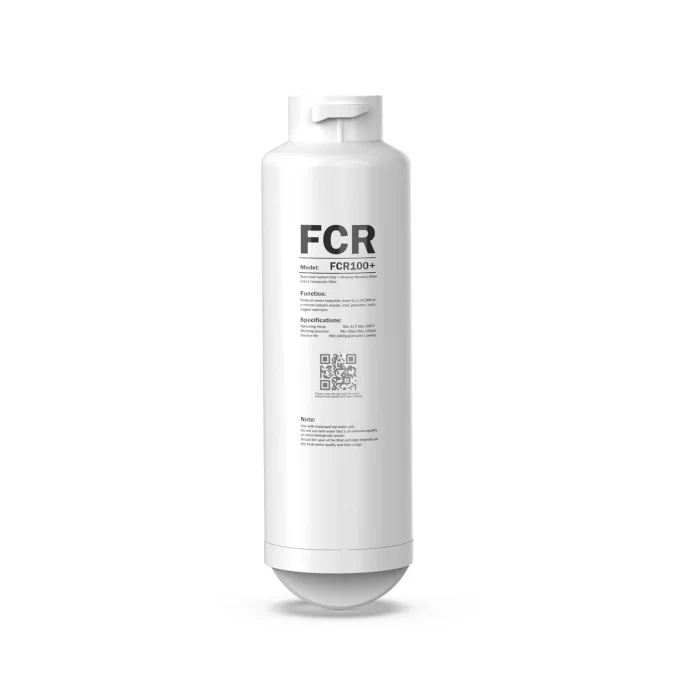
Cartridge 1, 2-in-1: RO + carbon
Strip.
RO membrane and carbon filtration in one cartridge. See the published results for lead, arsenic, PFAS and more below.

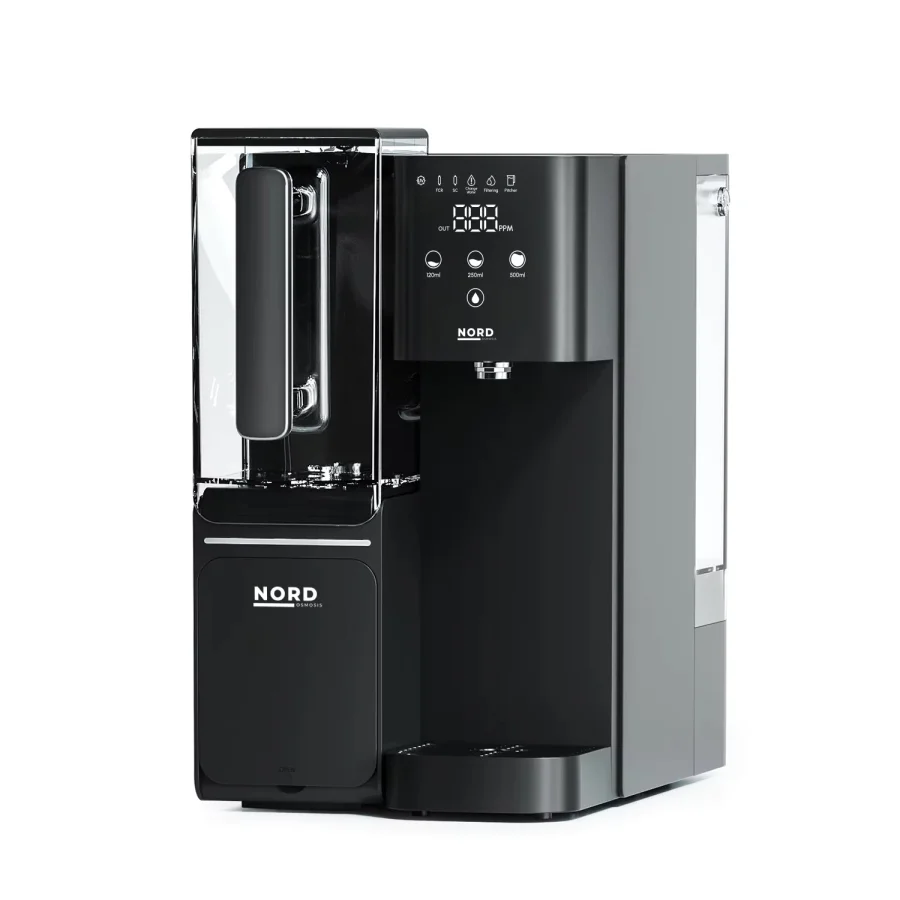
Reverse osmosis.
Mineral restoration included.
Two 2-in-1 cartridges plus UV-C. All included.
Delivery in Sweden Swedish team, Gothenburg
Nord’s published specifications.
A stable countertop near a power outlet, with space above the machine to lift out the tank and room in front to take out the pitcher.
Keep the tank and pitcher clean and follow the cartridge replacement instructions. RO Core about every 12 months, Mineral Restore about every 90 days.
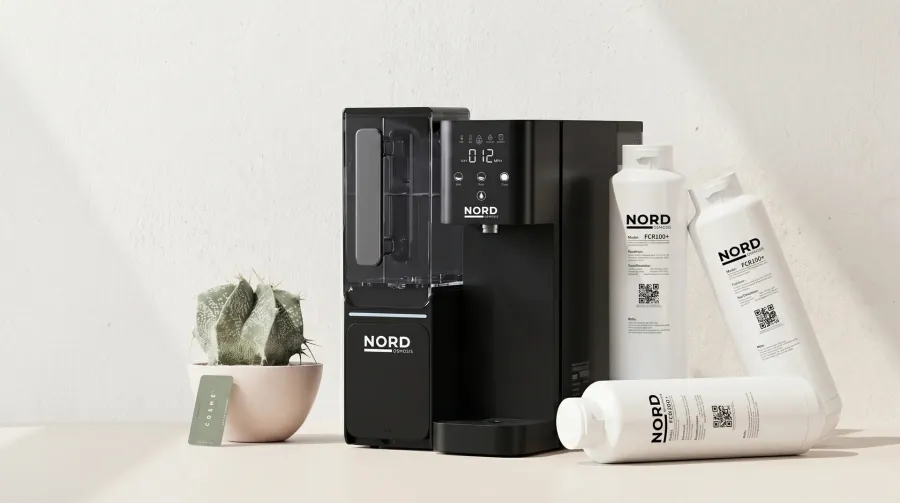
Two 2-in-1 cartridges and UV-C. The first strips with an RO membrane and carbon. The second puts minerals back and polishes with carbon. UV-C protects last. All included.
Cartridge 1, 2-in-1: RO + carbon
RO membrane and carbon filtration in one cartridge. See the published results for lead, arsenic, PFAS and more below.
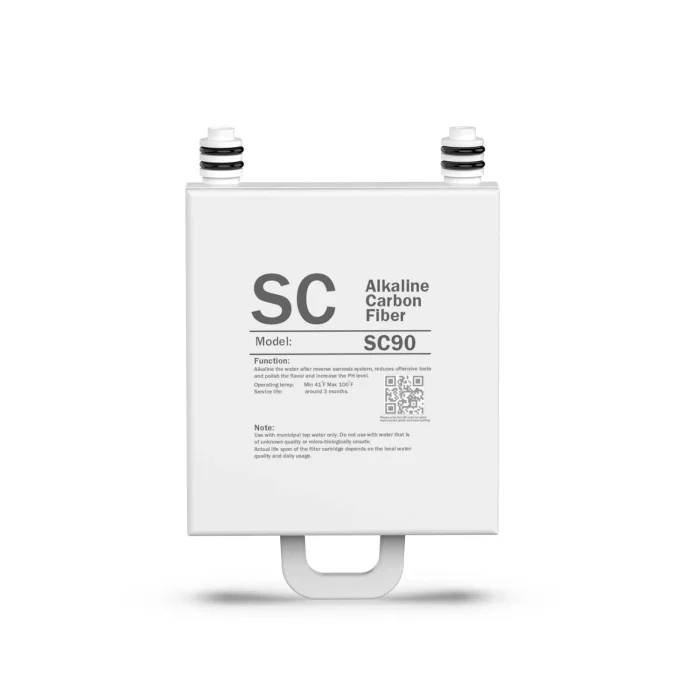
Cartridge 2, 2-in-1: minerals + post-carbon
Calcium, magnesium and potassium go back in after RO, and a final carbon stage polishes the taste.
UV-C, the last step
After RO and the mineral post-filter, the water passes UV-C light last. A second barrier against bacteria, viruses and parasites, working with light instead of size.
Illustrations of the processes, not technical cross-sections. Go deeper into the science.
Lead, arsenic, PFAS and coliform bacteria, measured before and after filtration. Published in full, corrections included.
| Substance | Before | After | Unit | Reduction |
|---|---|---|---|---|
| Total Dissolved Solids | 833 | 27 | mg/L | 96.76% |
| Chlorine | 2.04 | <0.01 | mg/L | >99.50% |
| Nitrate | 26.537 | 0.825 | mg/L | 96.89% |
| Fluoride | 8.793 | 0.459 | mg/L | 94.78%† |
| Arsenic | 0.2980 | <0.0002 | mg/L | >99.93% |
| Cadmium | 0.0512 | <0.0002 | mg/L | >99.60% |
| Chromium | 0.274 | <0.001 | mg/L | >99.63% |
| Lead | 0.1524 | 0.0003 | mg/L | 99.80% |
| Mercury | 0.0069 | 0.0003 | mg/L | 95.65%† |
| Copper | 2.783 | 0.019 | mg/L | 99.32% |
| Barium | 11.560 | 0.024 | mg/L | 99.79% |
| Selenium | 0.121 | <0.001 | mg/L | >97.17% |
| PFOS (PFAS) | 0.001003 | <0.000004 | mg/L | >99.60% |
| PFOA (PFAS) | 0.000734 | <0.000004 | mg/L | >99.45% |
| Perchlorate | 0.110 | <0.002 | mg/L | >98.18% |
| Total Coliforms | 5.0×10⁵ | <1 | CFU/100 mL | >99.99% |
Values from Nord Osmosis’s published product data. They are test values, not a guarantee for every source water or operating condition. The original laboratory report has not been independently checked here.
“1,000+ contaminants” describes the range of dissolved substances an RO membrane is built to reject by size. The 16 parameters above are the ones measured for Osmosis One.
“<” means below the stated measurement limit. “>” marks a minimum reduction: the true value is at least the bar drawn.
† Fluoride (94.78%) and mercury (95.65%) are calculated from the displayed concentrations as (before minus after) ÷ before × 100. Their previously published percentages, 97.79% and 99.80%, did not match those concentrations. All other reductions are reproduced as published.
Compared with AquaTru Classic in its standard configuration¹: what comes in the box, and the published specifications.
| Feature | Osmosis OneNord | AquaTru ClassicStandard filter |
|---|---|---|
| Mineral-adding post-filter | Included | Optional upgrade |
| Built-in UV-C treatment | Included | Not included |
| RO + carbon filtration | Yes | Yes |
| Refillable feed-water tank² | 4.5 L | 3.8 L |
| Filtered water : wastewater³ | 3.5 : 1 | 3 : 1 |
Drawn live: each mineral as a dissolved ion in water. Tap a tile to stir.
pH after the mineral post-filter
7.5-8.5
Nord’s specification for One Mineral Restore. The exact mineral content and pH depend on your source water and filter age.
Water with almost everything removed is called “aggressive” in water treatment: it readily dissolves what it touches. Adding minerals back gives it balance, and a rounder taste.
One Mineral Restore comes with every system. Pull it out and push in a new one about every 90 days. See the cartridge.
“Reverse osmosis… on steroids!”
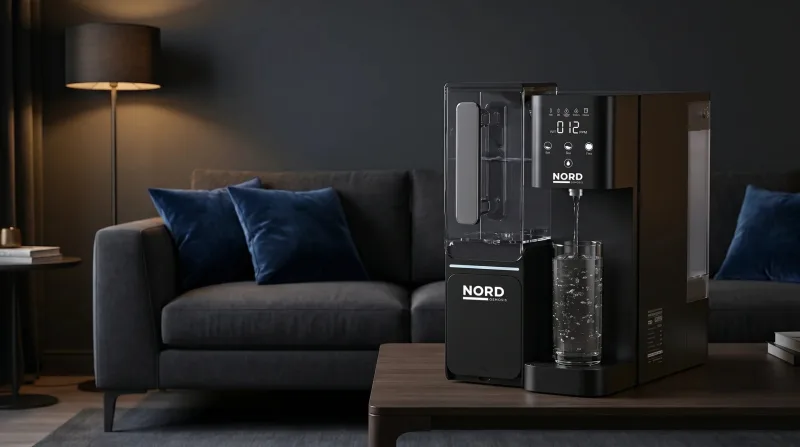
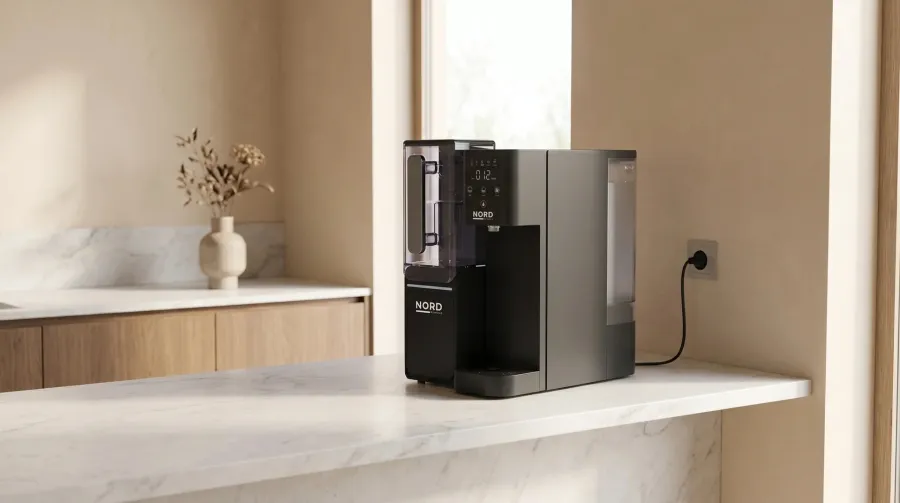
No installation. No plumber. No landlord call. Plug it in, fill the tank, pour. Set the pitcher back and it refills by itself.
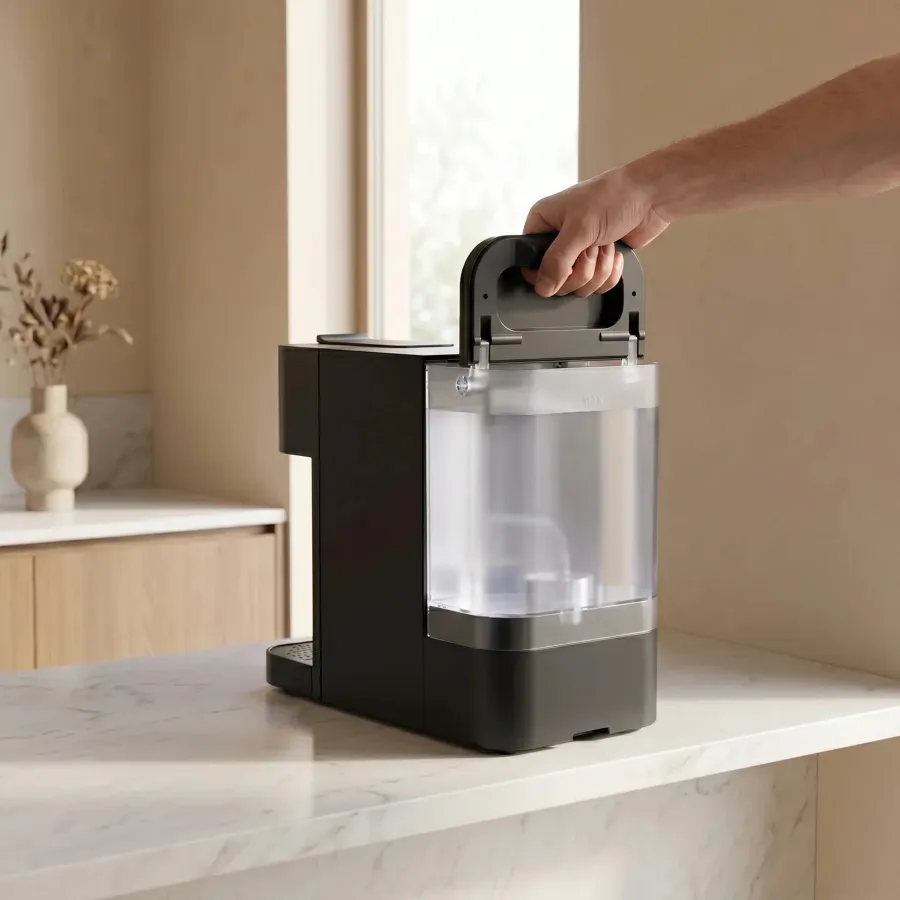
The removable rear tank holds tap water before filtration.
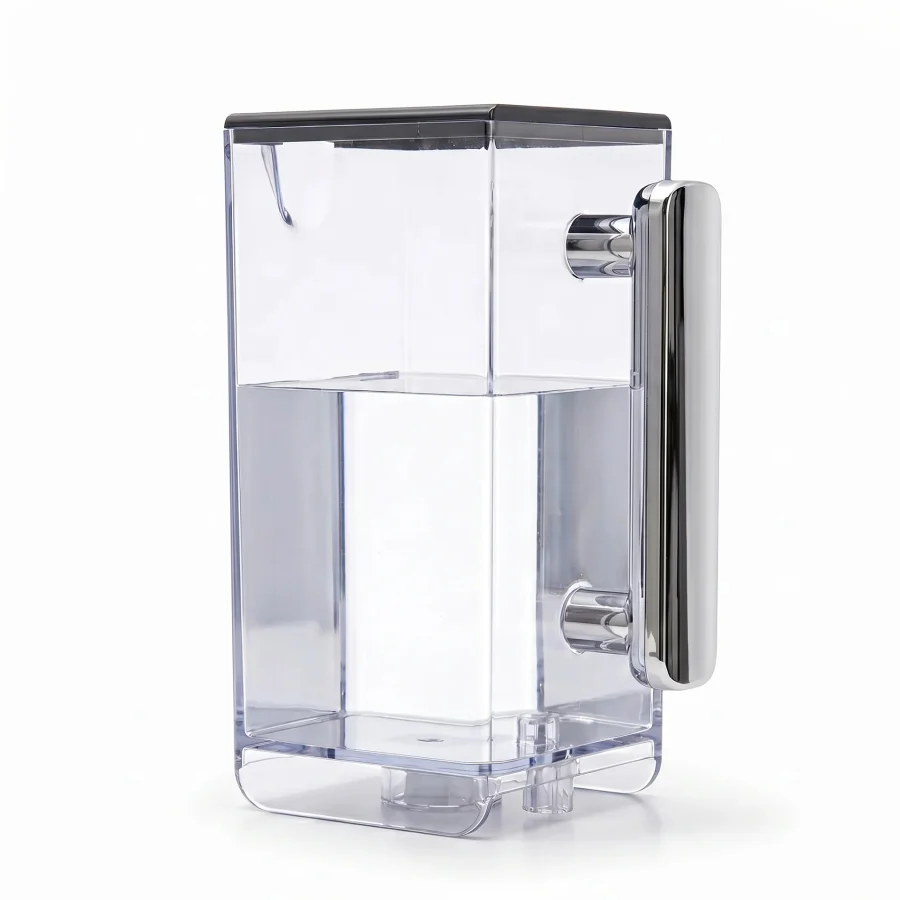
Filtered water collects in a separate, removable pitcher. Take it to the table or chill it in the fridge.
Sealed tanks are hard to reach inside. The 4.5 L feed tank lifts out, so you can wash it properly. Empty the remaining concentrate before refilling.
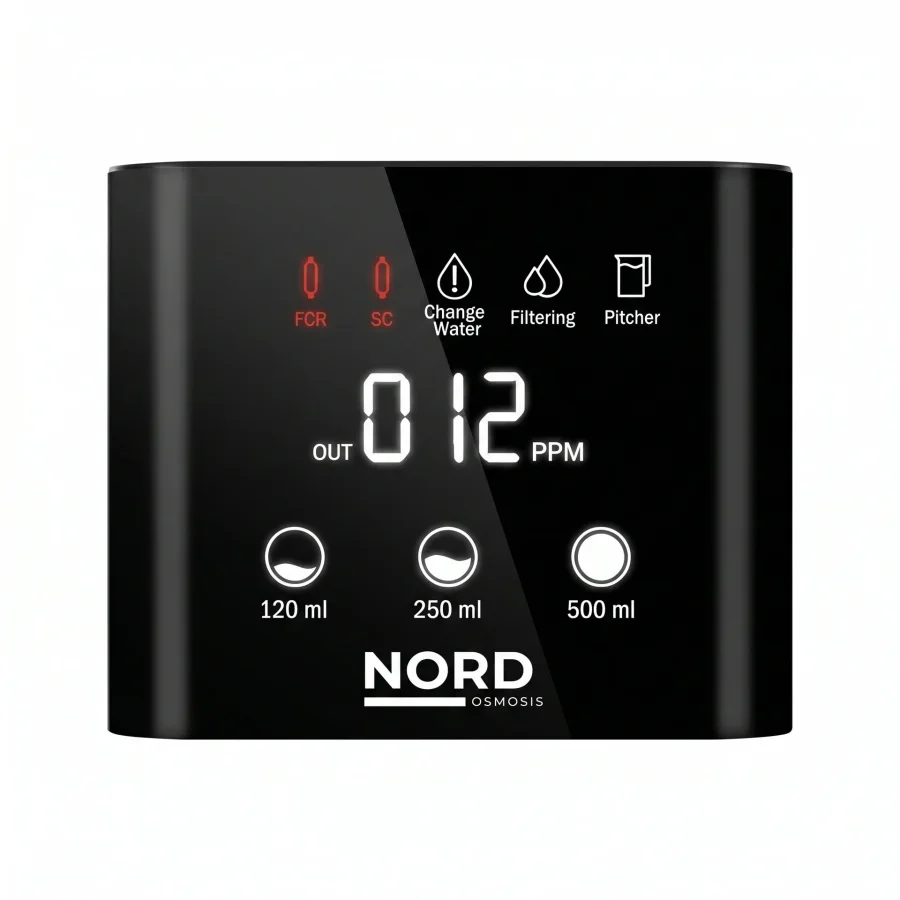
The TDS display estimates dissolved solids. It gives you a reading to follow over time, but it cannot identify individual contaminants or confirm that water is safe.
What TDS can and cannot tell youWe read the threads in r/WaterTreatment, r/Biohackers and r/PFAS. These are the objections that come up most, answered without hype. Test, don’t guess.
It is empty, not dead. RO takes minerals out along with everything else, and most of your minerals come from food anyway. We put calcium, magnesium and potassium back for taste, balance and pH, not as a supplement.
Fair. Pure permeate picks up CO₂ from the air and settles near pH 6, with nothing to buffer it. That is exactly why One Mineral Restore sits after the membrane: per Nord’s specification it brings the water to pH 7.5 to 8.5.
Often a fair hit: many are a bit of calcite with no numbers. Ours exists for taste and stability, and we are not hiding behind adjectives. The mg/l figures come from a lab, and when we have them, they go on this page.
Neither. TDS is a trend number, not a safety score. It cannot see PFAS, lead or bacteria. Use the display to spot membrane wear over time, and use a lab test for specific substances.
Osmosis One’s published ratio is 3.5 litres of filtered water per litre of concentrate. Use the concentrate for plants or cleaning. Never filter it again: it holds what the membrane rejected.
Correct, and we do not claim it. Our published results show 99.80% for lead, over 99.93% for arsenic, over 99.60% for PFOS, and 94.78% for fluoride, the lowest of the sixteen. Unit quality matters, which is why we publish ours.
They can. A study of 300 household RO tanks found most holding 10,000 to 100,000 bacteria per millilitre. Our feed tank lifts out so you can actually wash it, and UV-C is the last step before the pitcher.
Most of the time in Europe, it is. Östersund and the Veneto region were fine too, until they were not. Test first if you want certainty, and read the result against the EU limits on our science page, not against a marketing claim.
Still wondering? Email info@nordosmosis.com.
By size, no: they are thousands of times larger than RO pores, and UV-C follows as a second barrier. A size comparison, not a parasite test of Osmosis One.
Yes, as the last step after RO and the mineral post-filter.
No. The system uses a refillable 4.5 L tank and a power outlet, with no permanent plumbing connection. Leave room above the machine to lift out the tank.
Yes. Returning the pitcher to its base starts filtration automatically. The feed tank needs enough water, and the filters and containers must be fitted correctly.
Match the cartridge reference in your machine. RO Core combines RO and carbon filtration. Mineral Restore combines mineral addition and carbon post-filtration. Carbon Final is a separate carbon-only post-filter. Check the manual before substituting one for another.
Yes. Osmosis One uses BPA-free materials.